Dental Article
Understanding Gum Shrinkage After Tooth Loss
If you’ve recently lost a tooth or are transitioning to dentures, you may have noticed your gums looking thinner or "shorter" than they used to be. This isn't just your imagination—it is a biological process called resorption.
Schedule Free Consultation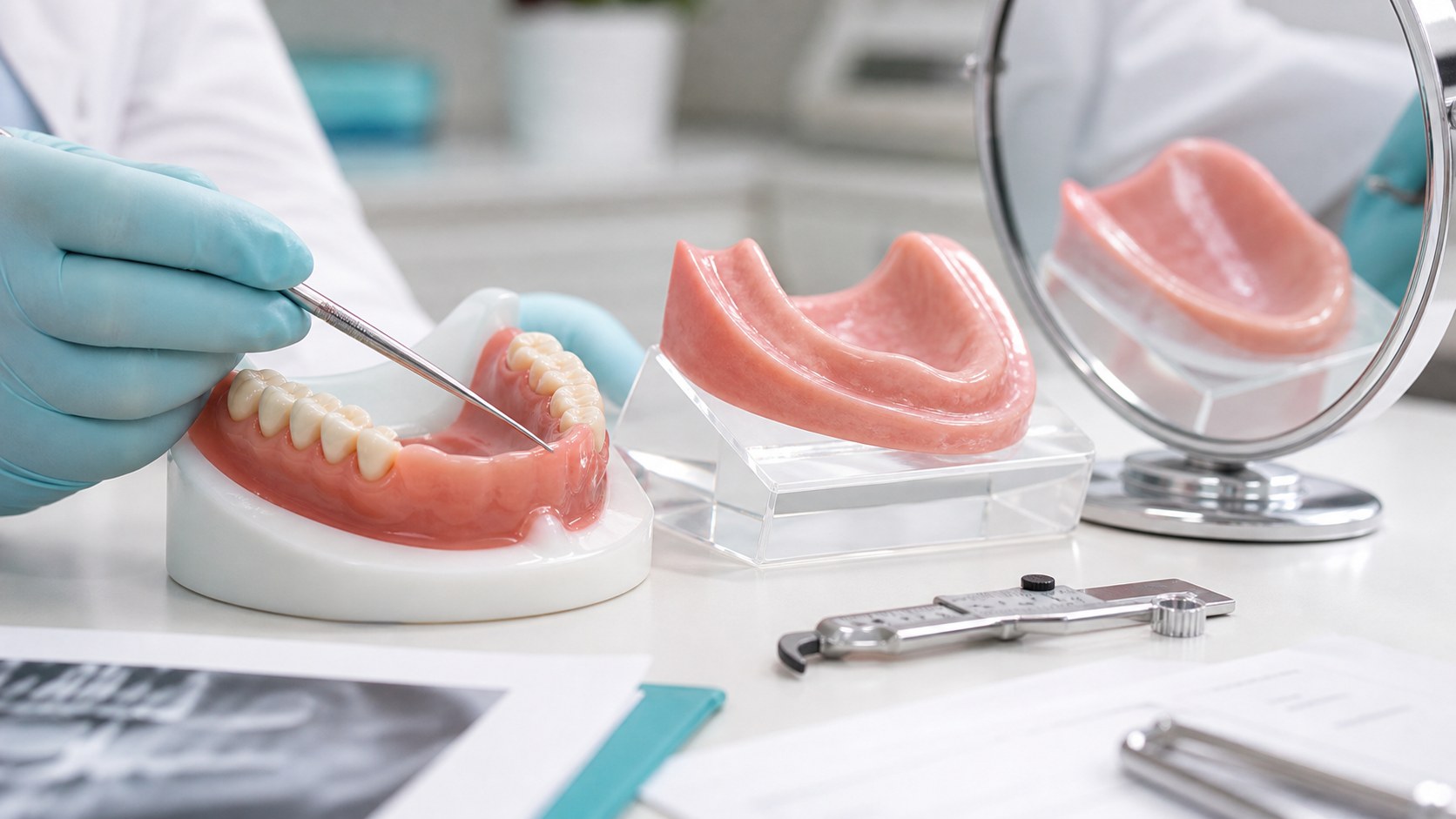

At MyBite, we believe that understanding the "why" behind these changes is the first step toward reclaiming your smile and your confidence. Here is the science behind why gums shrink when natural teeth are no longer there to support them.
The Biological "Anchor": Why Teeth Matter to Your Jaw
Your jawbone and gum tissue are remarkably efficient. They operate on a "use it or lose it" system.
When you have natural teeth, the roots are embedded deep within the alveolar bone. Every time you bite or chew, that root sends tiny vibrations and pressure signals into the bone. This stimulation tells your body to keep the bone dense and healthy.
When the tooth is removed:
The Stimulation Stops: Without the root, the bone no longer receives the signal to regenerate.
The Bone Recedes: Your body begins to reabsorb the bone minerals, causing the jawbone to lose height and width.
The Gums Follow: Your gums are simply a "sleeve" over the bone. As the bone underneath melts away, the gum tissue collapses inward and downward, leading to that "shrunken" appearance.
The Real-World Impact of Gum Shrinkage
For many patients, this change is more than just cosmetic. It can lead to:
Changes in Facial Shape: As the bone and gums shrink, the distance between your nose and chin can decrease, leading to a "collapsed" or prematurely aged look.
Loose-Fitting Dentures: If you wear traditional dentures, you may find they become loose over time. This is because the "foundation" they sit on is constantly shifting and shrinking.
Discomfort: Shrinking gums can expose sensitive areas or create sore spots where dentures rub against the thinning tissue.
Protecting Your Smile: What Can Be Done?
The good news is that you don't have to simply accept gum and bone loss. Modern technology offers ways to "trick" the body into maintaining that vital tissue.
Dental Implants: These act as artificial roots. By placing a titanium post into the bone, we restore the stimulation needed to stop bone resorption and keep the gums full.
Implant-Supported Dentures: These provide the stability of implants with the full-arch restoration of a denture, protecting your facial structure.
Early Intervention: The sooner you replace a missing tooth, the more natural bone and gum tissue you can preserve.